BESE TESTIMONY OF MCPSA EXECUTIVE DIRECTOR TIM NICOLETTE ON THE RIGHT TO READ ACT & 2026 MCAS RESULTS
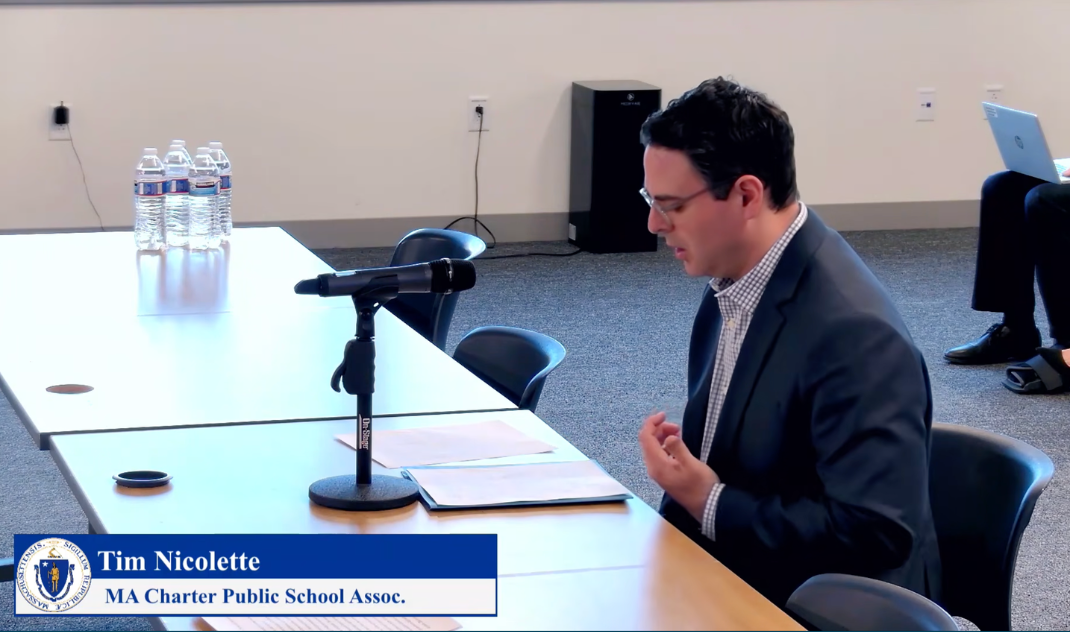
September 22, 2026 | Tim Nicolette, MCPSA Executive Director
On September 22, 2026, Tim Nicolette, Executive Director of the Massachusetts Charter Public School Association (MCPSA), testified before the Massachusetts Board of Elementary and Secondary Education (BESE) on the implementation of the state’s new Right to Read Act and the release of 2026 MCAS assessment results. Read his full testimony below.
Good morning. My name is Tim Nicolette, and I am the Executive Director of the Massachusetts Charter Public School Association. The Association represents Commonwealth charter public schools serving 46,000 students, and we are committed to ensuring that all children and families across the Commonwealth have access to high-quality public schools.
Which is why I am pleased to be here today as the Board discusses two important issues impacting all public schools — implementation of the new early literacy law and the release of 2026 assessment and accountability outcomes.
The Association is a proud member of the Mass Reads Coalition. We were honored to work with peer organizations and our partners in the legislature and the Governor’s office to pass the Right to Read Act. The need to better help our children build proficiency as readers and writers is clear and urgent. Charter public schools are eager to serve as a partner as you build regulations and implementation plans for this critical legislation. We invite you to call upon us, and we look forward to working together to ensure all students benefit from practices proven to help children learn to read.
One of the ways we’ll be able to measure progress as this new law is implemented is through statewide assessment data, such as the MCAS results to be released later this morning. As we prepare to receive these results, I invite us all to embrace two sets of questions.
First, what student groups, schools, and communities are achieving at the levels we aspire to? And who is being left behind? We have been on a journey since the disruptions caused by the pandemic, and undoubtedly, we still have more to do. There are some schools and districts leading the way to recovery. What can we learn from those schools and districts so that we can help more students make meaningful progress faster?
As I think about what I’ve observed in district and charter public schools in which students are excelling, this is what I know to be true: The adults relentlessly believe in the potential of every child. They hold unfailingly high expectations for all students. They utilize rigorous curriculum and instruction, and they hold themselves accountable for delivering on the promise they make to their families and their communities.
There is a second set of questions I encourage us all to ask as well: Namely, how will we as a community respond to what the data shows? Will we point to all of the challenges and say change is not possible or that it doesn’t matter? Or will we embrace a shared sense of accountability to one another? Will we each ask what more we can do — as school and district leaders, as teachers, as families, as students, and for you all, as members of the Board of Elementary and Secondary Education — to live into our shared commitment to each other and ultimately to our children?
Because the data to be released today is not merely numbers. Those numbers represent children. And those numbers tell us a story about our children. They tell us whether our children can read, whether they can analyze, whether they can think critically, and much more. Ultimately, they tell us whether our children are building the skills that will empower them to live the lives they dream of.
Our children are watching, and I hope the way in which we, collectively, respond to today’s data will make them proud.
Thank you for your leadership and for your commitment to the children and families of the Commonwealth.